DEPTRUM Solves Underwater Active Perception, Giving Underwater Robots 3D Vision

From Face ID on smartphones and face-payment to intelligent robots, active 3D vision is rapidly entering everyday life. But when a 3D camera goes underwater, perception that was once stable deteriorates sharply — or fails entirely.
The problem is not the algorithm. It is the inherent limitation water imposes on light propagation. For a robot to achieve active 3D perception underwater, the core prerequisite is an emitter that can stably project a laser dot pattern through water — long regarded as one of the hardest technical barriers in underwater active vision.
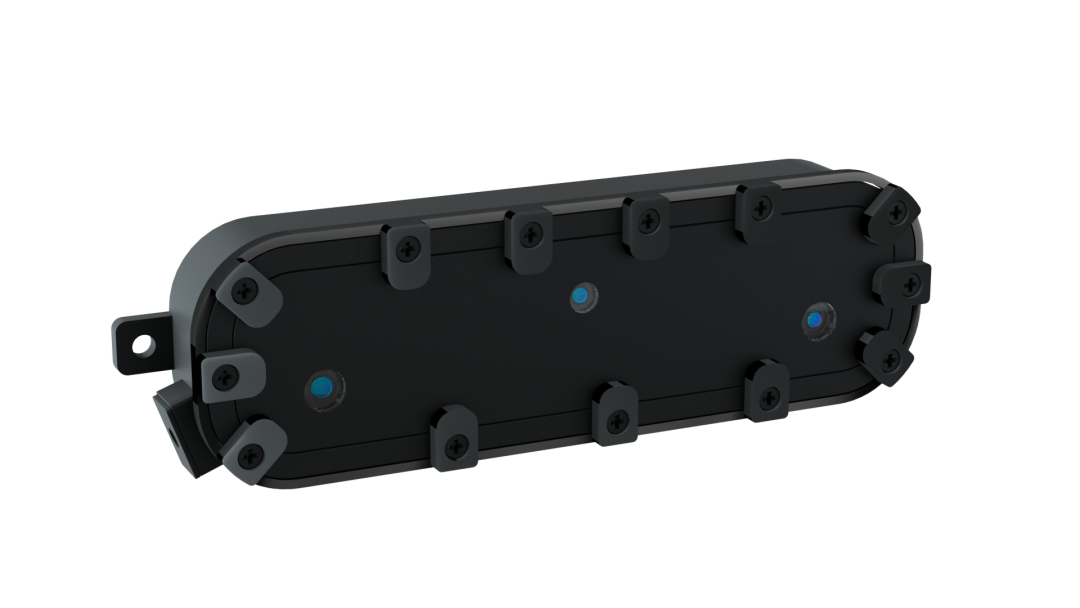
DEPTRUM has now released the industry’s first underwater dot-pattern blue-light solution and introduced PISCA 1000, an underwater active stereo vision product that brings a new active 3D perception approach to underwater robots.
The Underwater Environment Redefines “Usable Light”
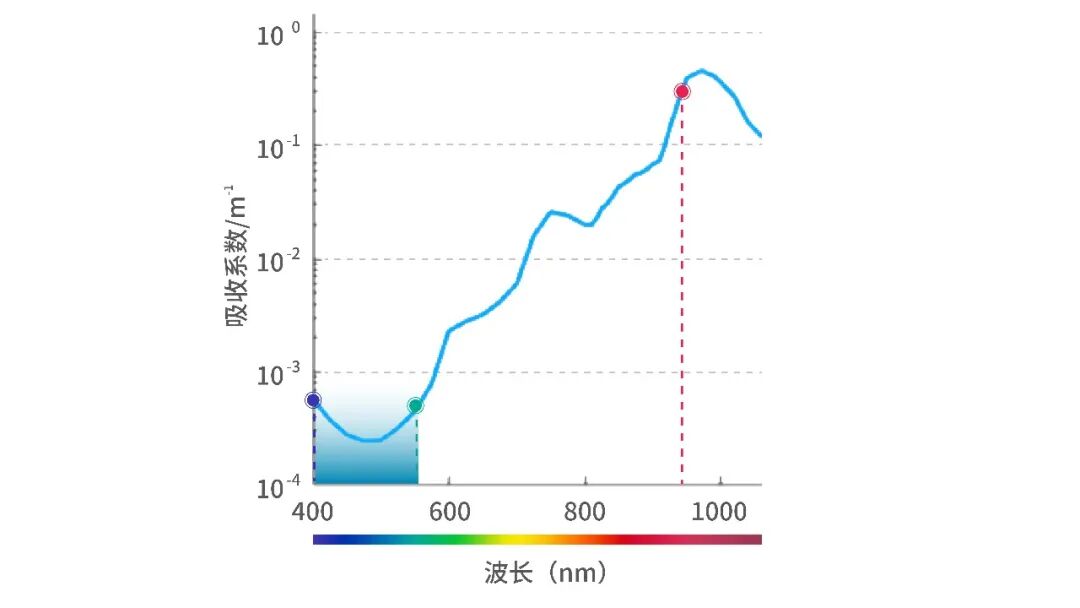
Water absorbs light of different wavelengths to markedly different degrees. Most mainstream consumer 3D cameras today use 940nm infrared light. This approach is highly mature on land, but underwater it is one of the worst-performing wavelengths: 940nm infrared attenuates rapidly once it enters water, with an effective penetration distance of only a few centimeters — far short of what robots need for spatial perception, obstacle recognition and environmental mapping.
By contrast, blue-green light in the 400–550nm band propagates far better underwater, with effective detection ranges extending to tens of meters. Infrared 3D vision designed for land environments therefore cannot simply be transferred underwater. For underwater robots to achieve stable and reliable active perception, the design must be rethought at the level of the light source itself.
The Challenge Is Not Direction, but Industrialization
The industry has long agreed that underwater vision needs blue-green light. What is genuinely difficult is not the technical direction, but the lack of mature, stable core components with mass-production capability. Dot projectors widely used in consumer electronics today rely mainly on 940nm VCSEL laser arrays built on GaAs materials, an industrial chain that is already highly mature. Moving to the blue-green band, however, requires the GaN material system.
Due to complex processes and efficiency constraints, blue-green VCSEL arrays have yet to achieve mature industrialization. For a long time they have suffered from low output power, high cost and limited stability, remaining largely at the stage of small-batch sampling and laboratory validation — insufficient for the scale and reliability the robotics industry demands. As a result, earlier underwater blue-light solutions could mostly only achieve single-point emission, and true active dot-pattern projection has long lacked a mass-production path.
DEPTRUM’s Answer: Sidestepping Component Limits by Rethinking Underwater Projection
Faced with this challenge, DEPTRUM did not follow the conventional VCSEL array route. Instead, it built a completely new underwater dot-pattern blue-light solution based on mature GaN edge-emitting blue-green lasers combined with its self-developed WFP wavefront modulation chip.
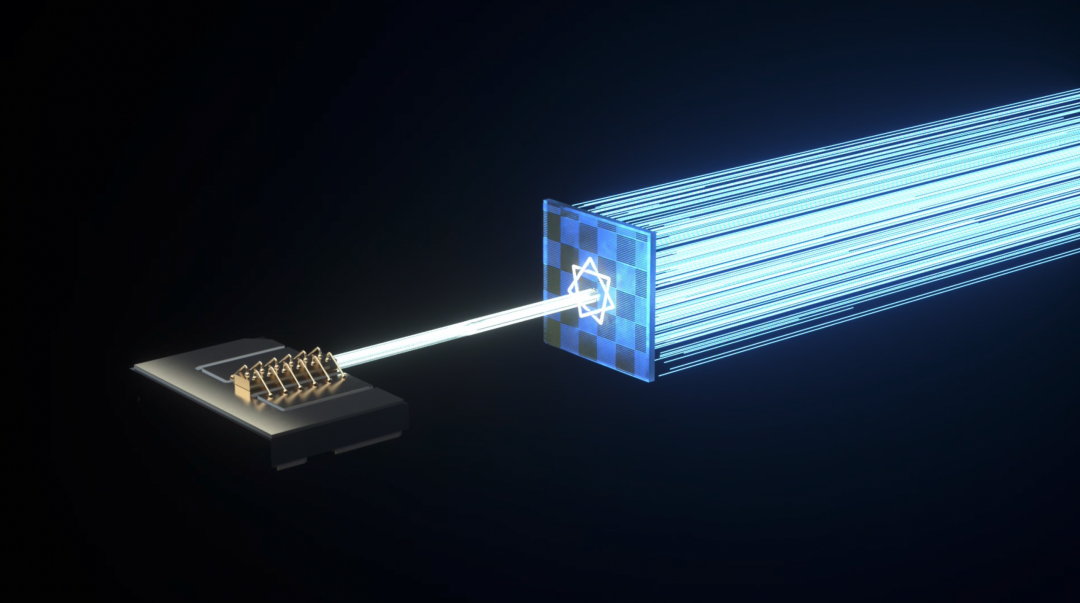
GaN edge-emitting lasers are already mass-produced for laser displays and laser projection, offering high stability, reliable performance and controllable cost. DEPTRUM’s self-developed WFP wavefront modulation chip precisely modulates the output wavefront of a single laser, enabling flexible generation and stable projection of speckle dot patterns.
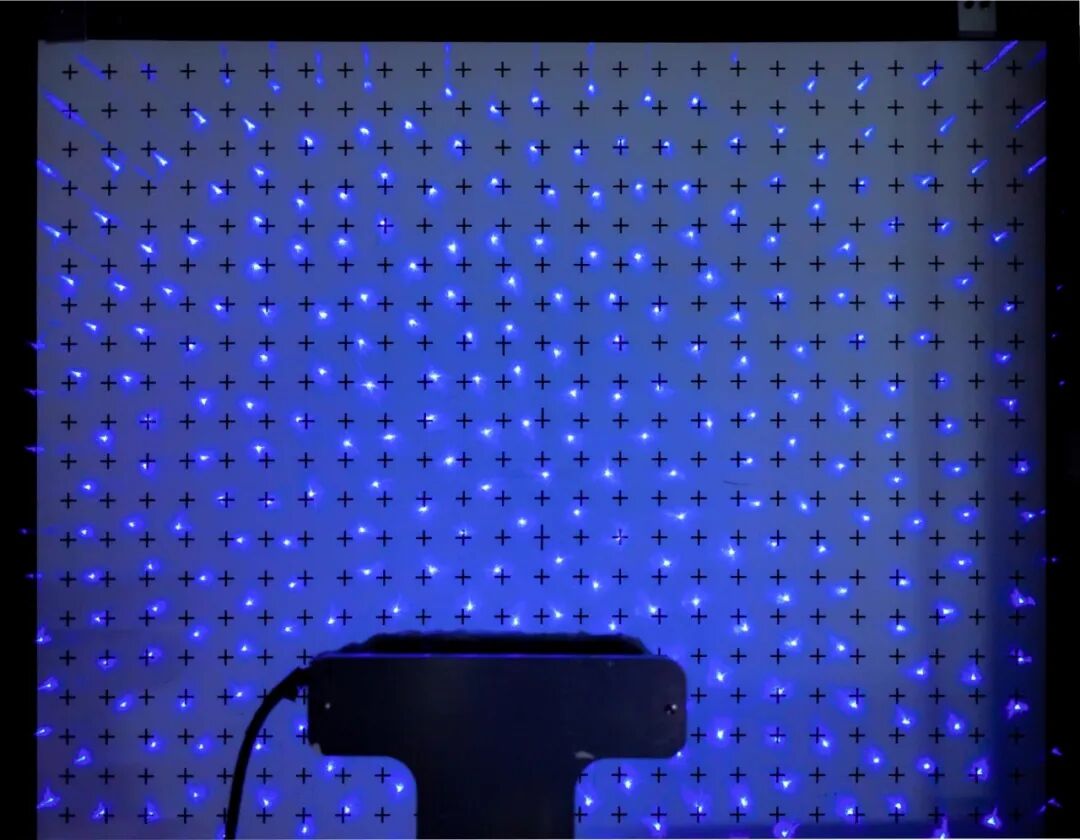
Compared with conventional approaches, this solution does not depend on immature blue-green VCSEL arrays, offering clear advantages in component maturity, system stability and mass-production feasibility — opening a new industrialization path for underwater active vision.
PISCA 1000: Letting Robots See the 3D World Underwater
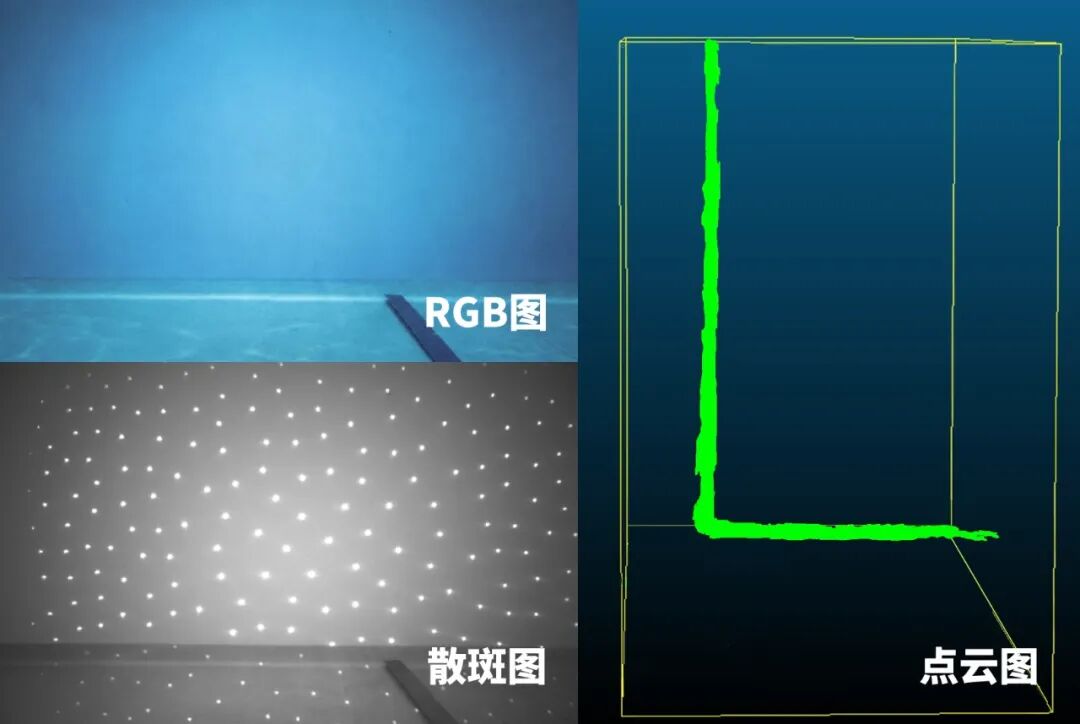
Based on its underwater dot-pattern blue-light technology, DEPTRUM has officially launched PISCA 1000, which achieves underwater active stereo 3D imaging. PISCA 1000 operates stably across an illuminance range of 3 to 100,000 lux and supports a perception distance of more than 3 meters, meeting the demands of diverse and complex underwater scenarios. Compared with the more costly blue-green LiDAR approach, the “dot-pattern projection + stereo vision” architecture strikes a better balance between perception accuracy, system cost and mass-production capability — making it better suited to large-scale deployment in the robotics industry.
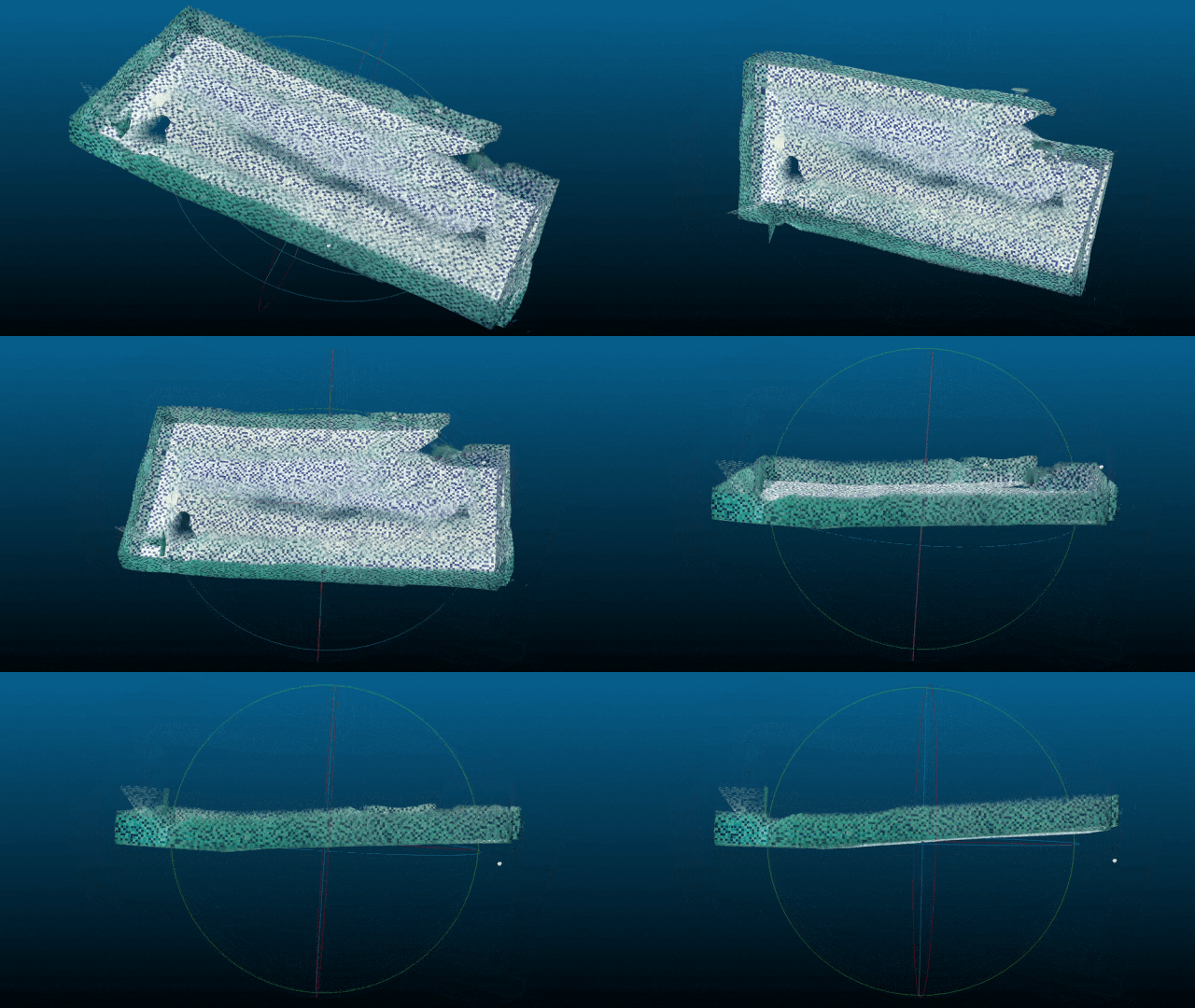
Beyond active perception, PISCA 1000 also performs excellently in underwater 3D mapping. In the pool scenario shown below, the reconstructed image fully presents the pool wall contours, the pool floor structure and the slope transition between shallow and deep water zones. The pool wall boundaries are continuously closed, the floor texture is clearly visible, and the overall spatial structure is complete with accurate geometric relationships, faithfully reproducing environmental features.
3D mapping result of a swimming pool captured by PISCA 1000
Unlike conventional line-scanning LiDAR, which can only capture single-line cross-section information and struggles to represent continuous surfaces and complex structures, PISCA 1000 directly acquires rich 3D spatial data. It can identify environmental boundaries as well as perceive surface morphology, height variations and spatial details, building a more complete and precise 3D map that provides a more reliable foundation for localization, navigation, path planning and environmental perception.
In practice, pool-cleaning robots can proactively identify pool walls, steps, slopes and obstacles to reduce collisions and optimize path planning. In underwater inspection, aquaculture and underwater operations, robots will gain stable, low-cost 3D environmental perception for the first time.
From Land to Underwater: Redefining the Boundaries of Robot Vision
For a long time, constrained by core components and technical approaches, underwater active vision has lacked a genuinely mature industrialized solution. The launch of this underwater dot-pattern blue-light solution not only represents a new technical breakthrough for DEPTRUM in active 3D vision, but also provides the underwater robotics industry with a more practical perception solution.
From land to underwater, DEPTRUM continues to expand the boundaries of 3D vision, giving robots reliable and stable spatial perception in more environments.