AI Large Models Accelerate the Evolution Cycle: 3D Vision Perception Opens New Opportunities

Reprinted from 21st Century Business Herald
Driven by AI large models, investors and industry players alike are pondering the impact and opportunities they bring. As models gradually acquire “emergent intelligence,” how the industry chain receives this technological enablement — and where to invest — has become a critical choice.
“A major theme for investors in recent years has been AI,” said Zhang Chen, general manager of investments at Yicun Songling, in an interview with 21st Century Business Herald. “Through accumulated learning in AI, our firm has formed an ecosystem playbook: during the perception cycle, we emphasized AI vision, touch, smell and brain-inspired fields; we are now in the model cycle, and will move toward the behavior cycle. Whichever stage of the AI cycle we are in, we firmly believe in China's industrial development.”
Beyond the natural-language-focused ChatGPT, in 2023 Meta released its image-oriented AI large model SAM (Segment Anything Model). SAM is a foundation model for image segmentation that can identify objects and understand images without additional training, achieving zero-shot generalization. The industry believes this opens the “GPT moment” for machine vision, driving cross-modal visual applications such as autonomous driving and security monitoring.
“In the first half of last year (2023) I still had concerns, even a sense of crisis: if AI became so powerful that any input data yielded good results, would our 3D perception industry even be needed?” analyzed Zhu Li, founder and CEO of DEPTRUM. “But through exchanges with peers in Silicon Valley, we reached a common conclusion: first, AI depends heavily on data sources — poor input data leads to poor output, so good sensors are valuable; second, AI ultimately requires computing and cost must be considered, so balancing sensing and compute is important. At the current stage, the industry is strengthening perception capability before expanding applications.”
The emergence of generative AI is shortening the duration of each AI development cycle and opening new space for the industry chain to evolve and land. But rapid iteration can also swallow existing capability layouts, testing the industry chain's thinking.
AI-driven evolution
If AI large models are like the brain performing computation, supporting the brain requires sufficient tentacles and nourishment — which is why the industry chain around AI perception is so important.
TF Securities pointed out that it is optimistic that 3D vision, combined more closely with AI, will enable more efficient intelligent perception and control systems. Applying deep learning, machine learning, large language models and other AI technologies to 3D vision perception can achieve more efficient data processing, feature extraction and pattern recognition.
Zhang Chen analyzed that in his definition of three AI development cycles, the perception cycle mainly enriches the information needed by embodied intelligence through perceiving the external environment — vision, smell, brain-inspired sensing — solving the problem of information acquisition; the model cycle mainly solves machine thinking and decision-making; and the behavior cycle may produce applications beyond current human cognition.
The emergence of the SAM model opens new space for industry chain applications built on graphics and vision.
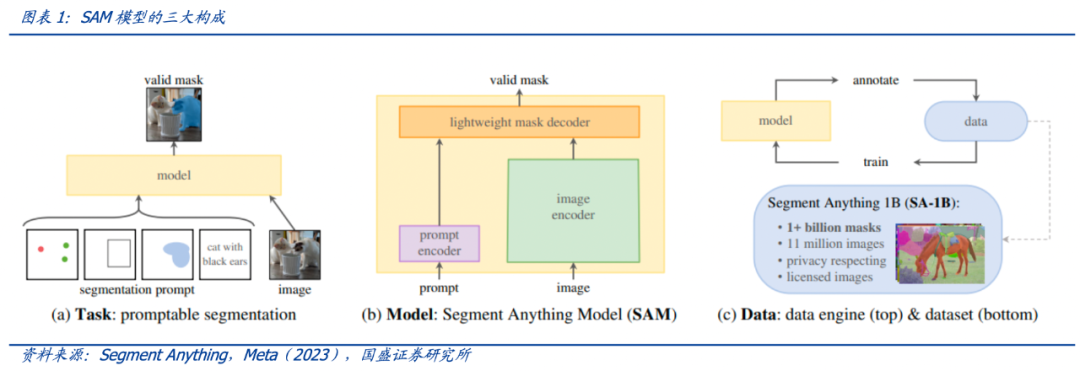
SAM model overview
“Looking at it now, the model cycle's development is shortening. For example, with multimodal fusion research, if investment institutions did not position themselves early in 2021, there may be no opportunity later. Because AI develops so fast, knowledge must be updated almost weekly,” Zhang Chen remarked. The AI industry has entered the model cycle, with both foundation models and industry models emerging; the application stage of large models will present many investment opportunities.
Under this logic, Yicun Songling, oriented toward the perception cycle, invested early in DEPTRUM, a leading 3D vision company. In DEPTRUM's recently announced RMB 200 million Series B, CICC Capital, Yicun Songling and Chongqing Kexing participated.
Founded in 2018, DEPTRUM has completed six rounds of financing — roughly one per year since founding — from several million US dollars initially to hundreds of millions of RMB now, totaling over RMB 500 million.
Zhu Li previously led Apple's 3D sensing project and chose to return to China to start a business after identifying the growth potential of this segment. He told the reporter that 3D vision sensing means enhancing a machine's perception capability by building X-Y-Z spatial coordinates. Compared with 2D vision, 3D vision primarily serves machine algorithms, is more precise and secure, offers stronger privacy, and can bring better perception to artificial intelligence.
“The emergence of AI large models has expanded machines' original capabilities. For example, designing a home robot vacuum used to require multiple classification models for good obstacle avoidance; with a general large model, a single model can rapidly boost the machine's intelligence.”
For the vision-sensing industry, AI large models can therefore drive more complete products and promote scaled adoption of AI-related software and hardware. The SAM model mainly solves the generality problem at the perception layer, making the conversion of spatial sensing information into natural language processing more efficient. “Frankly, most application companies can hardly build their own foundation model, but by introducing this underlying capability and fine-tuning with our data in vertical applications, we can create differentiated value,” he added.
“Of course, in large-model applications we are on the application side — no need to rush in too early,” said Zhu Li. One can be an application participant and explore new directions, but there is no need to invest prematurely in the models themselves, such as fine-tuning, because what you are doing now may well be offset by OpenAI's next feature upgrade in a few months. Grasping the core of one's own vertical scenario is what matters.
Perception-side roadmap
Facing the surging AI wave, industry players' technology and application roadmaps are steadily expanding.
Zhu Li explained that the Series B comes as the company stands at a node of rapid business growth. On one hand, business growth needs capital to support capturing greater market share; on the other, capital reserves allow the company to build deeper moats across the three key links of perception, algorithm and computing.
“I keep thinking. Visual perception touches almost every intelligence-related industry; choosing what to do starts with positioning what value you create in the value chain,” Zhu analyzed. Because in current real-world AI applications, more than 85% of information comes from vision. DEPTRUM's goal is to use vision capability to solve the interaction problem between intelligent devices, people and space.
He continued that DEPTRUM has built an “arsenal”: the ultimate goal is not to predict which technology route the market will choose, but to first stockpile capabilities and products, then help the market make technology choices based on industry demand, guiding it toward more effective implementations so that technology truly empowers industry and market.
Smartphones were the first application to push the 3D vision industry to an inflection point: after Apple applied Face ID in the iPhone X, supply chain costs fell rapidly, enabling exploration in other industries.
“In 2023 there was a clear trend: multiple major domestic phone makers configured dedicated security chips in flagship phones. 3D vision has greater advantages than 2D in this regard, and flagship phones have relatively high cost headroom, so 3D vision applications have greater imaginative space,” Zhu analyzed.
In scale terms, even though the phone industry has entered a plateau, it remains a market of over a billion units annually. For supply chain companies, even 10% adoption means development space of over 100 million phones.
Beyond phones, payment is another fast-growing market for biometrics. “Face payment was our focus in previous years; palm payment will be the next trend. As the industry pushes forward, even Europe and the US — cautious about information security — have recognized this biometric payment method. Compared with concerns that facial information involves privacy, palm payment is considered the best form of biometrics in an open society,” he continued.
DEPTRUM has reportedly reached deep cooperation with WeChat Pay, extending palm-scanning technology to transportation, sports, campus, retail, dining, office and shared-charging scenarios, with convenience and user experience improved over face payment.
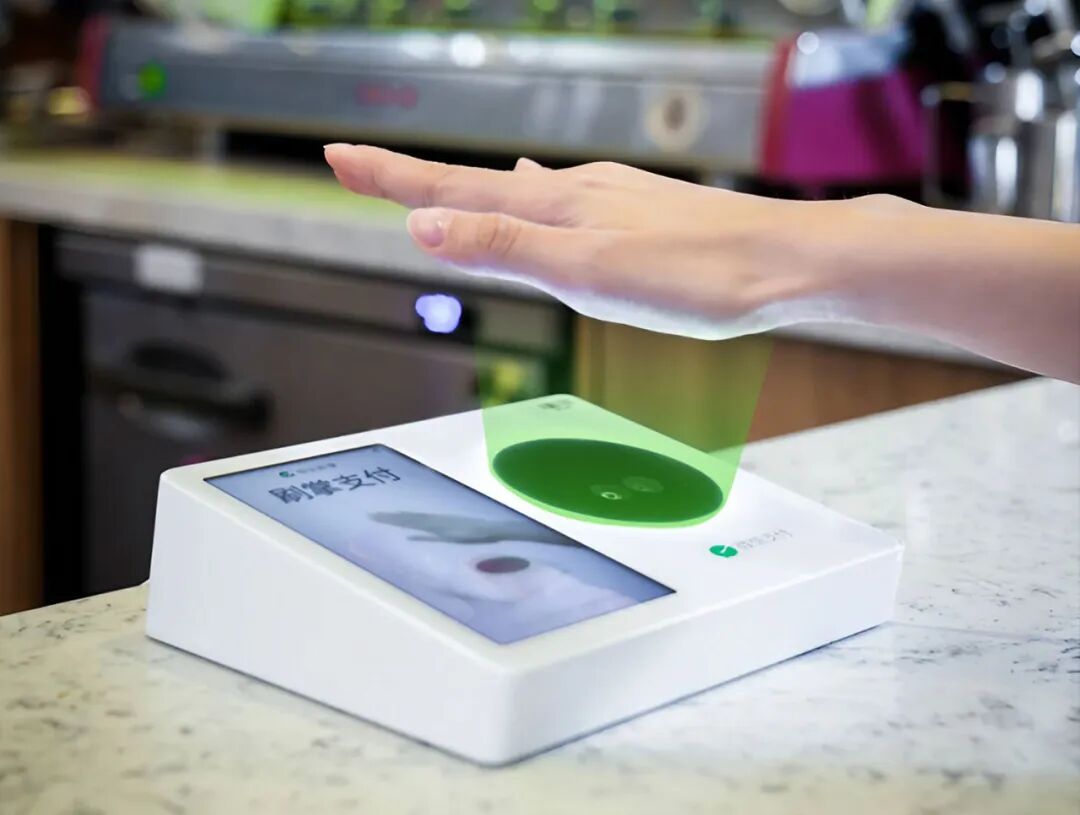
Palm-payment application scenarios
In the up-and-down XR industry in recent years, Apple's Vision Pro contains many optical components and represents a major opportunity for 3D sensing. But even with mass production in 2024, it is clearly not yet a consumer terminal for large-scale adoption.
Zhu Li believes the important mission of Vision Pro at this stage is to enable large numbers of professional developers to build the application ecosystem. Precisely because the XR industry has not yet produced a killer app, the industry inflection point will not come quickly. “Perhaps in 2-3 years, once the industry reaches consensus on XR application trends and the hardware iterates with rapidly falling costs, the XR products the market truly needs may arrive around 2026.” Based on this judgment, DEPTRUM is cooperating with innovative product companies on new product designs, but will cautiously control investment.
Robots and automobiles are two other terminal markets with both high growth space and high ceilings. Zhu analyzed that the robot market brings relatively high added value, while the automotive market will inevitably see high demand alongside rapid domestic iteration. “In the automotive market we currently focus on serving 2-3 domestic customers, polishing the product to be good enough before considering global sales.”
Finding the way through the cycle
Smart vehicles are undoubtedly one of the most important adoption drivers of the vision-sensing industry chain today. But facing different scenarios, automakers may rapidly choose and adjust routes.
Zhu Li analyzed that 3D vision sensing has two landing scenarios in smart vehicles: intelligent driving and human-machine interaction. Current intelligent-driving applications such as assisted driving and automated parking are dominated by LiDAR suppliers, but their high cost means a high threshold for widespread adoption. Human-machine interaction is also key in the wave of vehicle intelligence. “It's like the difference between smartphones and feature phones — keyboard versus screen interaction makes a huge experience difference.” These capabilities can extend from consumer electronics accumulation, covering how the car understands human commands (air and gesture interaction) and how it understands the in-cabin environment.
“For example, after a person enters the car, how the seat automatically adjusts to their needs — we can already deliver such solutions,” Zhu said. 3D vision can also address privacy and security concerns: for in-cabin fatigue monitoring, cameras and algorithms are needed, but 3D vision does not construct image information — only spatial information. “Even in the worst case where hackers capture this data, they cannot know what imagery lies behind it.”
“We believe 3D vision will be the key technology for in-cabin human-machine interaction in the future, but we will not participate in exterior perception for autonomous driving,” Zhu added. The autonomous driving market is fiercely competitive; finding an entry point with a viable business loop matters — competing regardless of cost is untenable. Meanwhile, with the rise of large models, the future route of autonomous driving has many variables and previous architecture designs may change fundamentally, so caution is needed for now.
DEPTRUM reportedly began co-developing cabin 3D vision solutions with a domestic EV maker in March 2022, and previously delivered a software-based vision perception system. “In 2023 we obtained TS16949 (quality system) certification, and starting in 2024 we can provide integrated software-hardware solutions,” he noted.
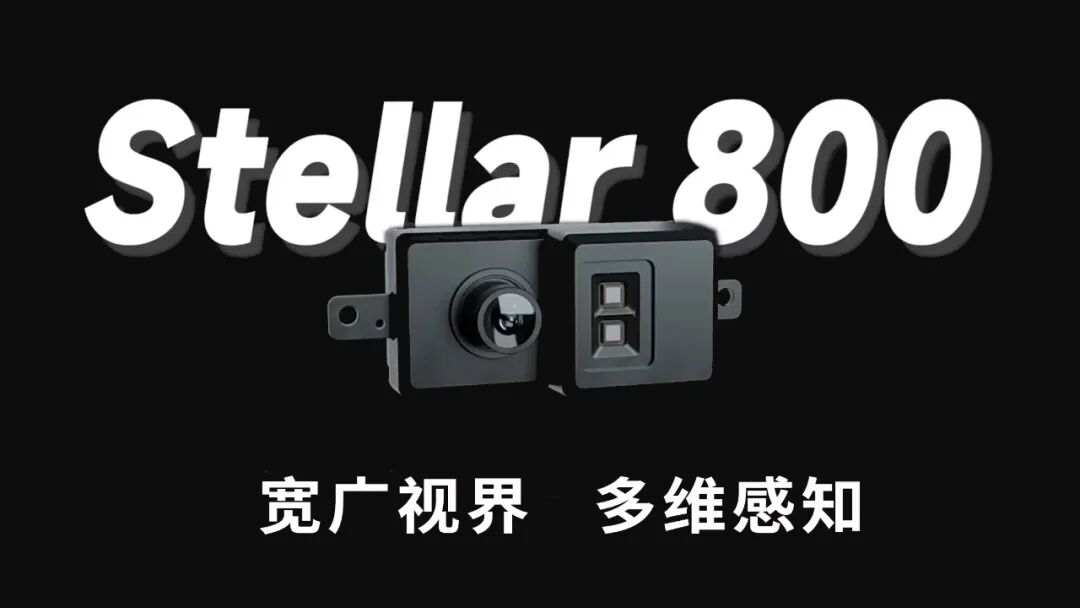
DEPTRUM automotive-grade 3D camera
Historically, 3D vision sensing was pioneered by US and Japanese vendors who matured the business model; today the domestic industry chain remains relatively fragmented.
Zhang Chen analyzed that enabling AI to understand what the physical world really looks like is the primary advantage of the 3D sensing industry chain — the key link providing machines with depth information about the physical world. “We believe machine vision has weathered multiple economic cycles; Europe, the US and Japan have found the laws of development in their niche segments with clear advantages. In this direction, from technology to product polishing to engineering mass production, all require accumulation, iteration and feedback. Developing machine vision in China — especially 3D vision — must go through the same process to find its own laws.”
“Consumer electronics is characterized by fast iteration and short cycles but astonishing explosive power. Start-up teams therefore need sharp commercial instincts and an understanding of technology evolution trends. This is why we chose to invest in DEPTRUM,” he said.
DEPTRUM reportedly expects to achieve profitability in Q4 2023. “3D vision will be an important bridge for AI to enter human life in the future,” Zhu concluded. AI is penetrating daily life more and more, and wherever human-machine interaction is needed, there will be broad development space.