DEPTRUM Partners with Infineon REAL3(TM) 3D ToF to Empower a New World of Robot Vision

In the spectacular journey of artificial intelligence, machine perception is like an engine stirring waves of innovation. By imitating human senses, AI can interpret complex data, gain insight into its surroundings and make precise decisions. From visual recognition to speech understanding, machine perception not only enhances the naturalness of interaction, but also expands AI's application frontiers in health, safety, autonomous driving and beyond. Machines are becoming smarter, more sensitive and more adaptive.
To meet robots' needs for environmental perception, DEPTRUM has released the Deptrum Nebula 220 depth camera. It adopts an sToF hardware system based on DEPTRUM's proprietary nanophotonic-chip-modulated projected light fields, integrating structured-light and ToF depth reconstruction algorithms, with a single module completing both close-range obstacle avoidance and long-range SLAM depth reconstruction.
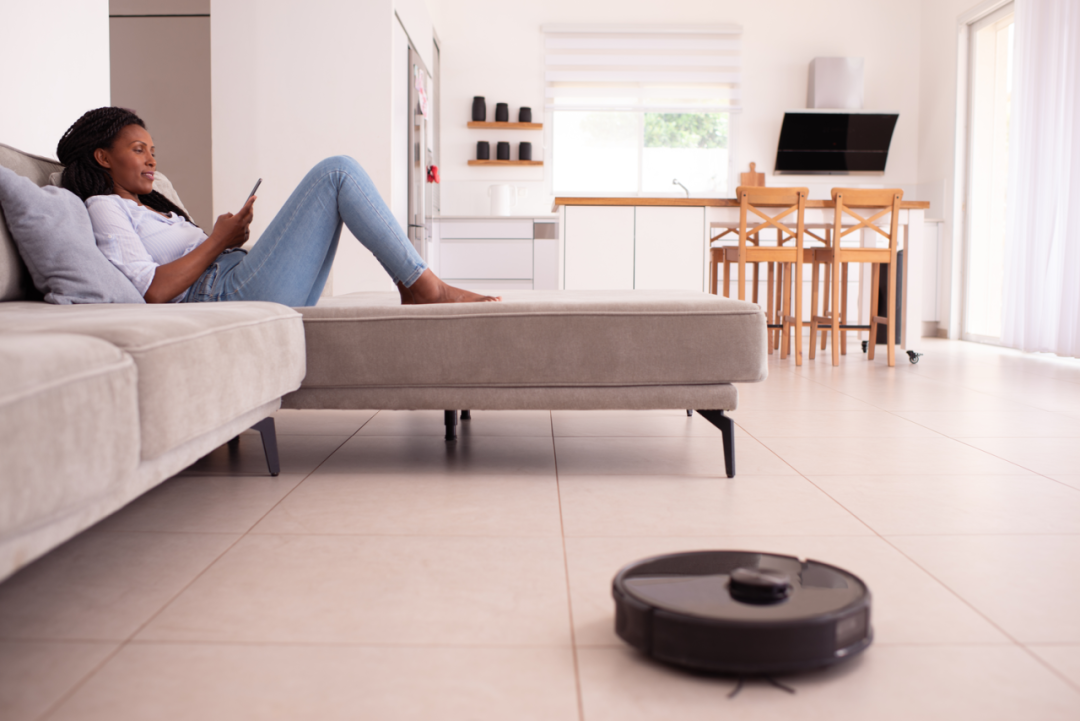
This design makes the structured-light and ToF 3D reconstruction performance complementary, achieving high-precision, wide-FOV point cloud output at both close and long range, and can be widely applied in robot vacuums, commercial robots and other scenarios, letting robots perceive more comprehensive information in complex environments, better complete obstacle avoidance and path planning, and better adapt to various working scenarios.
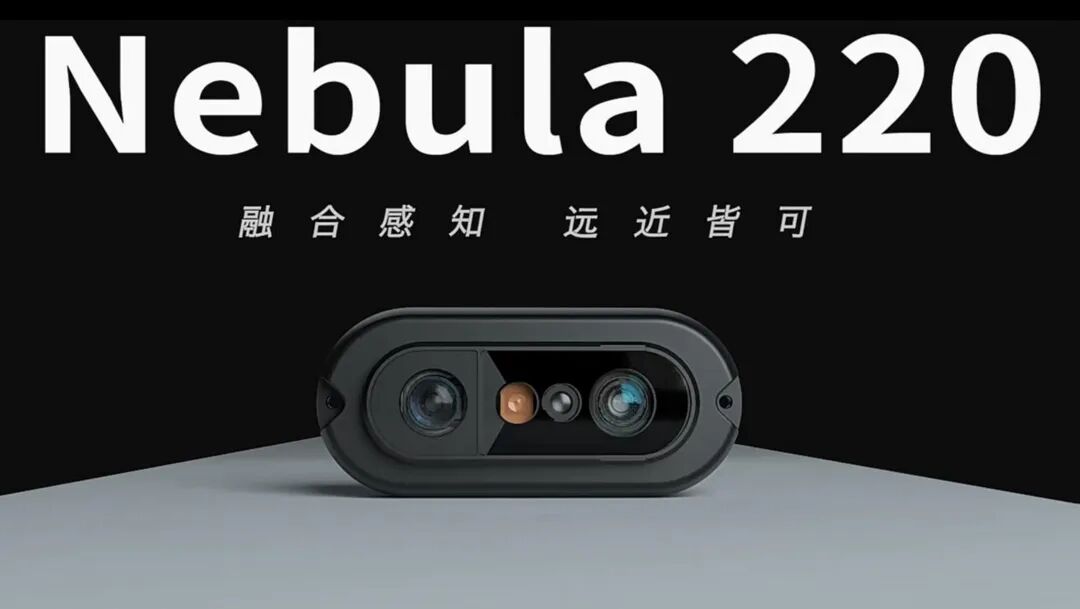
The development of depth cameras endows machines with deep image recognition — robots can not only “see” but “understand” their surroundings, coordinating more precisely with their working environments, leading us toward a smarter, more harmonious and more sustainable future.
The Infineon XENSIV(TM) series is dedicated to imitating human senses. Through 3D ToF, MEMS microphones, CO2 sensors, radar sensors and other products, it gives consumer electronics human-like perception — vision, hearing, smell, touch and more.
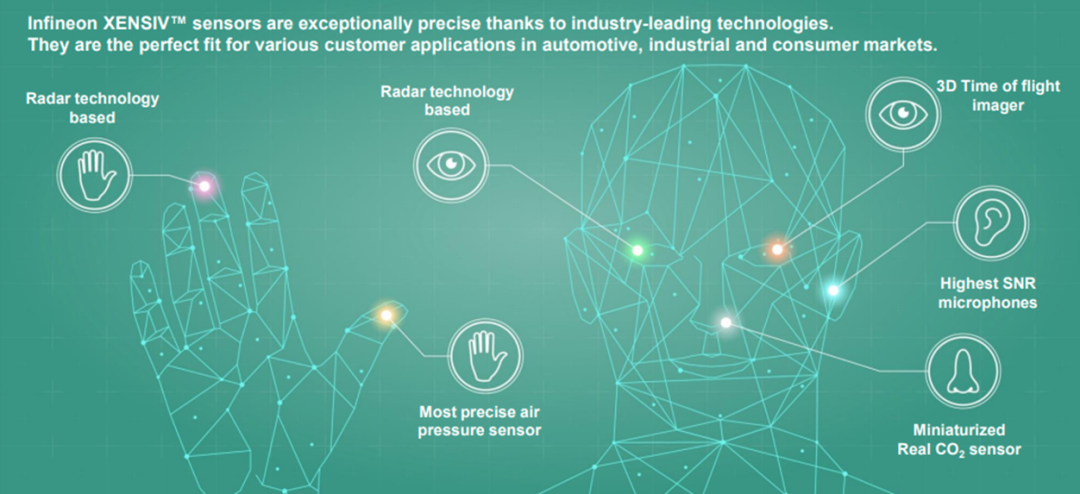
Among them, the Infineon REAL3(TM) image sensor is based on ToF (Time of Flight), the world's most advanced visual sensing technology, and already powers the smallest depth-sensing 3D camera modules on the market. Infineon's REAL3(TM) 3D image sensors provide real-time depth data with millisecond-level capture speed; the sensor is contact-free, fast, and unaffected by any ambient lighting conditions.
Thanks to its patented background light suppression (SBI) technology, REAL3(TM) supports camera deployment under all lighting conditions. REAL3(TM) time-of-flight image sensors enable electronic devices to build a 3D map of the scene in front of them — whether a room, moving or static objects, or people — and convert that map into the digital world in real time. Advanced algorithms use these data to measure distances and sizes and track motion and movement. In addition, the single-chip REAL3(TM) image sensor provides the third dimension for biometrics, 3D scanning, gesture and body tracking. Its outstanding performance in 3D computational photography and augmented reality applications has revolutionized user experience.
The Deptrum Nebula 220 depth camera integrates Infineon's IRS2975C and IRS9102C, a combination suitable for computational photography (bokeh, autofocus), remote scanning, augmented reality, robotics and other application fields.
Benefits of using the Deptrum sToF module / Infineon:
Lower production cost:
A two-in-one solution: a single sToF module replaces the current mainstream SLAM and obstacle-avoidance modules
No need for a large mechanical line-laser scanner (LDS) — less noise, longer lifetime and higher system reliability
No extra infrared camera system needed for night vision and dock finding
No low-precision line laser for obstacle avoidance
No additional illumination (fill-light) components
Fewer infrared sensors for cliff detection
Fewer sensors, lower production/assembly complexity
Paired with high-performance depth and 3D SLAM algorithms, lower CPU consumption
Building better products:
Lower robot vacuum height to enter lower-clearance spaces and clean more area
Compact front camera frees up space for bigger dust/water tanks or suction motors
Faster cleaning speed
Normal operation in dark environments
Fast AI obstacle avoidance based on 3D
Improving user experience:
Robot vacuums can be made thinner (e.g., 5.5 cm) to enter more low-clearance scenes
High-resolution obstacle avoidance prevents collisions and lowers maintenance cost
Better navigation, faster cleaning
Efficient software algorithms make robots smarter.
Privacy protection (no RGB needed)
Breaking traditional 2D mapping limits, providing complete 3D information for whole-home modeling