From 2D to 3D: What Has Improved in Service Robots' Visual Perception?

With the rapid development of technology, robots are applied ever more widely across fields, and the improvement of visual perception has played a crucial role in this process. Traditional robot vision systems mainly used 2D images, while innovative technology has made 3D visual perception a reality. The shift from 2D to 3D significantly enhances perception, giving service robots stronger environmental understanding and interaction capabilities.
2D vision systems rely mainly on planar images captured by one or more cameras; these images only provide an object's width and height, making it hard to accurately judge depth and spatial position. By contrast, 3D vision systems can acquire an object's depth information and reconstruct a 3D model of the surroundings — a clear boost to service robots' working efficiency.
Enhanced spatial perception allows service robots to identify and locate objects more accurately, improve obstacle avoidance, and achieve more precise navigation and operation. Moreover, 3D vision lets service robots rebuild a 3D model of their surroundings — a model that contains not only objects' shape and size but directly reflects their relative positions and distances, greatly improving the robot's environmental understanding so it can execute tasks efficiently in complex environments.
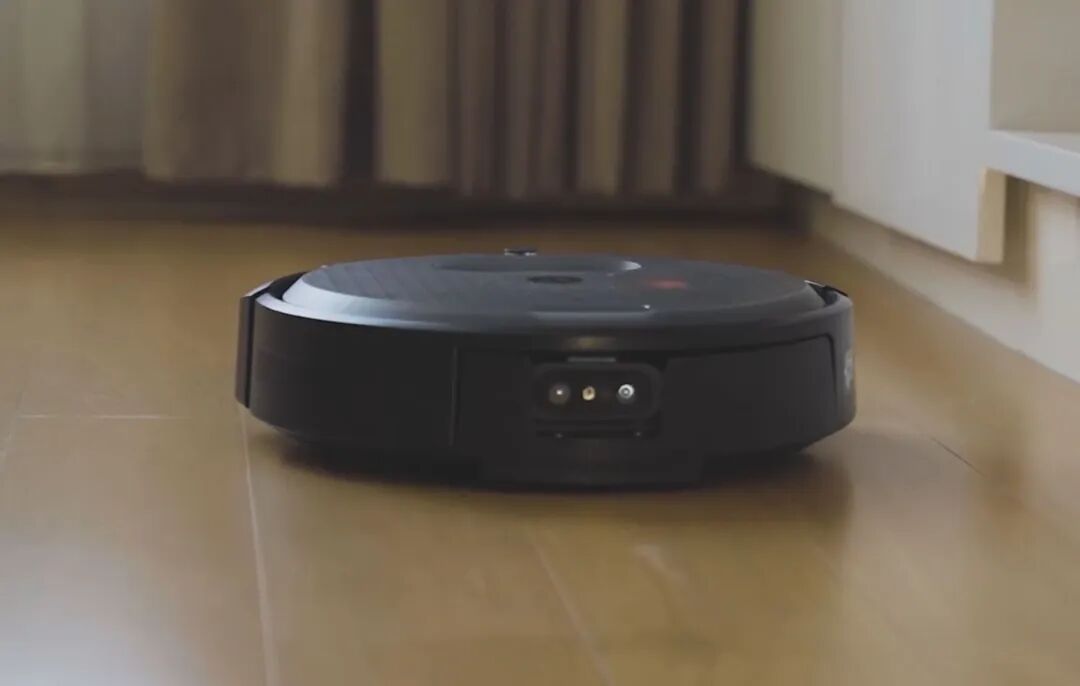
Take the home cleaning robot: through 3D visual perception it understands the room layout and furniture placement, detects obstacles in real time during work, effectively avoids collisions, and plans the optimal cleaning path through algorithms, improving cleaning efficiency.
The limitations of 2D perception make robots prone to recognition failures in scenarios requiring fine manipulation and complex interaction. 3D perception captures more detail, letting service robots retain excellent autonomous navigation and task execution even in complex scenes. It also provides richer data for machine learning and deep learning, improving service robots' autonomous learning and adaptability.
The application of 3D perception further expands service robots' scenarios — whether delivery in restaurants and hotels, or cleaning in homes and malls, 3D visual perception plays an important role. As a leading company focused on intelligent vision perception R&D and application, DEPTRUM continuously empowers service robots with 3D vision, giving them better visual perception.
To date, DEPTRUM has launched robot solutions across ToF, structured light, sToF and binocular routes — covering near, mid and long-range scenarios, and providing robots with combined navigation + obstacle-avoidance capability in one, achieving innovative breakthroughs in both performance and cost.
From 2D to 3D, service robots' visual perception has made a qualitative leap. This shift strengthens spatial perception and environmental understanding, improves autonomous learning and multi-scenario adaptability, and greatly expands robots' application scenarios — bringing service robots into our daily lives and providing better assistance and service to all industries.