3D Vision Reshapes Personalized Physiotherapy: DEPTRUM Powers the XingYao AI Therapy Robot

As AI moves toward embodiment, robots are evolving from traditional execution tools into intelligent agents with perception, understanding and response capabilities. In health and physiotherapy scenarios in particular, only deep “understanding of the body” can deliver truly warm, intelligent service.
Against this background, Embodied Storm launched the XingYao AI massage therapy robot, equipped with DEPTRUM's Aurora 930 structured light depth camera, achieving the leap from “visual capture” to “intelligent understanding” and redefining personalized physiotherapy.
Traditional massage robots are limited by their visual capability and struggle to deliver truly personalized therapy. With the Aurora 930's millimeter-level 3D perception, the XingYao robot scans key regions — neck and shoulders, back, lumbar spine — with high precision, generating dense point clouds and accurately identifying key skeletal landmarks such as cervical spinous processes and shoulder blades. Compared with traditional laser or infrared solutions, the Aurora 930 offers stronger adaptability and stability, working reliably across different skin tones, clothing and lighting conditions.
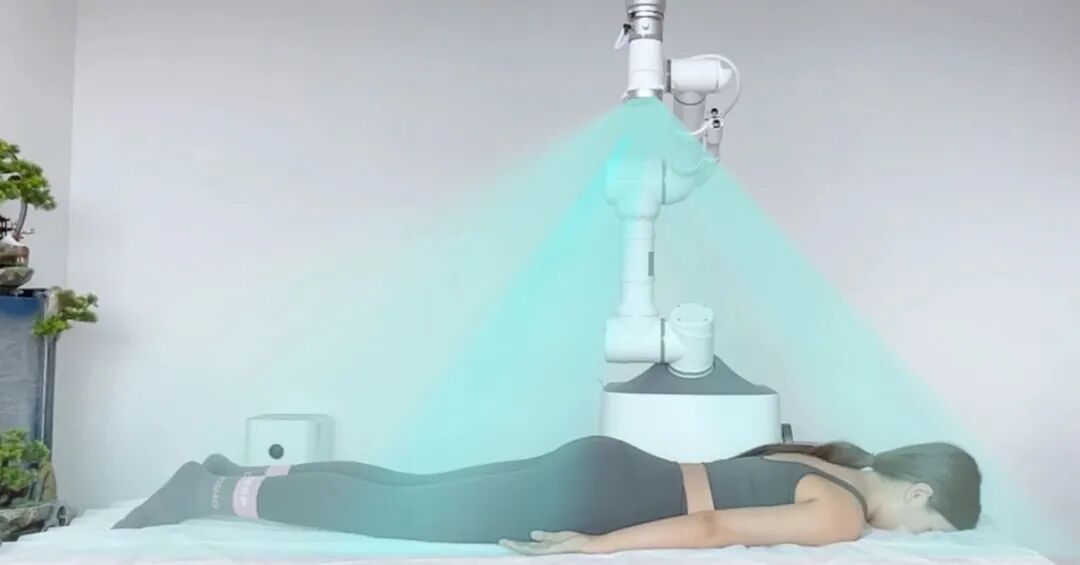
At the same time, the robot dynamically computes acupoint coordinates based on a 3D human body model and a meridian database. The solution does not rely on static templates and has strong adaptability and fault tolerance — even when users are at different angles or in motion, acupoints can be located accurately, greatly improving massage precision and solving the industry pain point of “acupoint drift.”
Combined with professional medical models and AI algorithms, users simply enter prompts such as “I went hiking today” or “my shoulders are sore,” and the system intelligently analyzes the body's state, recommends the most suitable massage plan, and records it automatically in the user's health profile for dynamic tracking and personalized optimization — making every session better matched to the body's current needs.

Since physiotherapy devices are often deployed in bedrooms, gyms and other lighting-complex environments, the visual perception system faces higher demands. The Aurora 930 has powerful anti-glare capability and stably acquires depth data even in low light, backlight and strong reflections, guaranteeing all-weather recognition and operation with no supplementary lighting — greatly improving deployment flexibility.
For user privacy, the Aurora 930 uses a non-imaging 3D vision solution: it collects only 3D visual information and generates no recognizable images. What the robot “sees” is only body shape and spatial coordinates — facial and body privacy information is never recorded or stored, protecting data security at the source while balancing precise recognition and privacy protection.
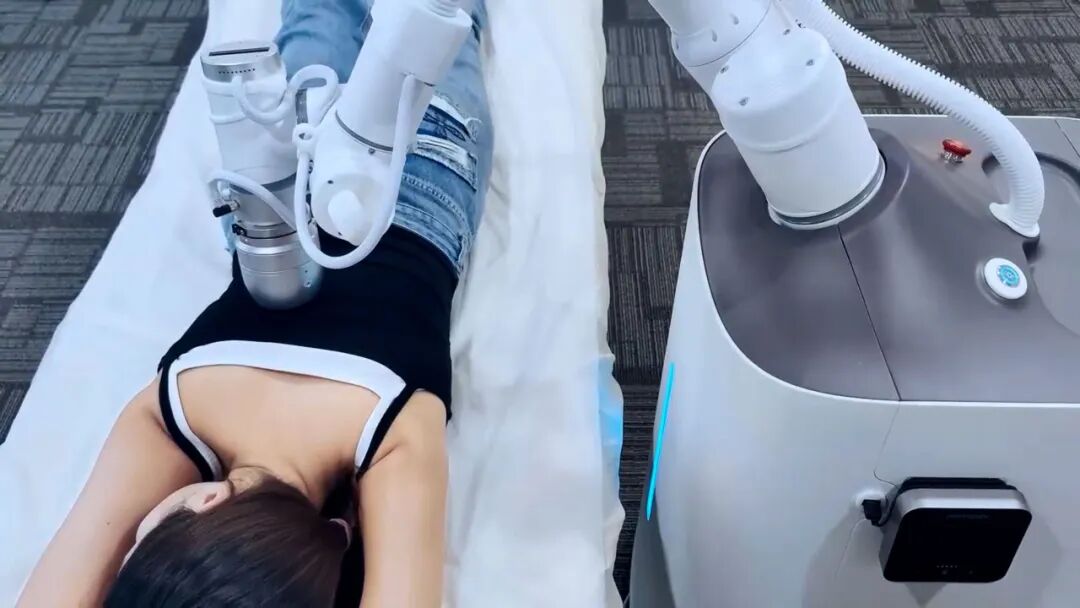
This cooperation with Embodied Storm is not only a deep application of DEPTRUM's technology in physiotherapy, but also a demonstration of 3D vision's promise in making intelligent health more personalized and intelligent. Going forward, DEPTRUM will continue its mission of “creating new dimensions,” leading 3D vision into more real-world scenarios and bringing multi-dimensional visual perception and environmental understanding to smart devices.