Spatial Perception Solutions
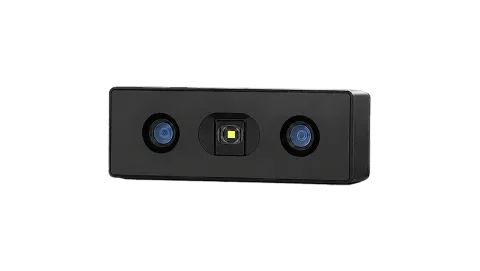
Based on Libra 3000, DEPTRUM uses AI stereo to capture depth at varying distances and improve reconstruction on glass, reflections and textureless areas. A wide field of view, global shutter and on-board computing support mapping while offloading the host.
Contact UsThe Challenge
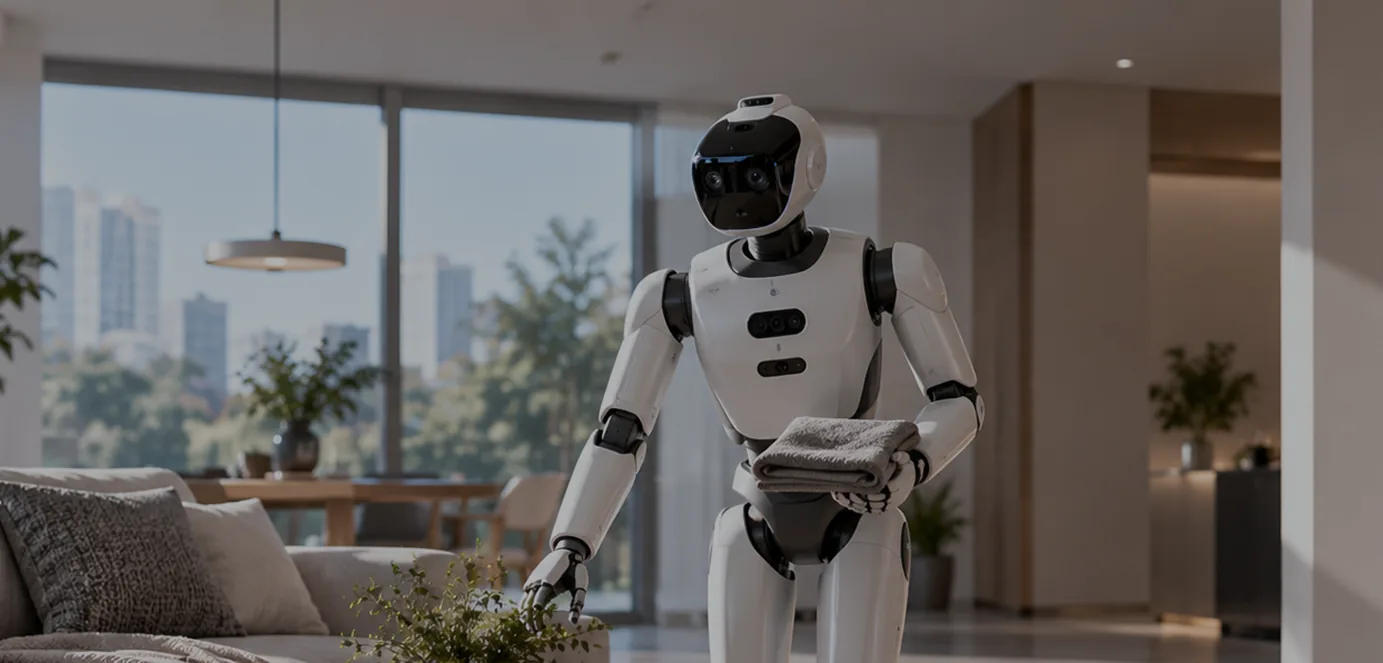
Head-mounted vision has to cover both distant spatial structure and nearby obstacles, supplying the environment data a robot needs to move and to do its work. Mounting height and field-of-view limits easily create blind spots, difficult materials undermine reconstruction completeness, and depth computing has to share resources with localization, planning and task models.
Multi-range perception
Passages and nearby obstacles coexist, so near and far detail both matter
Limited head field of view
Mounting height and field of view can miss low and lateral areas
Reconstruction on difficult surfaces
Glass, reflections and low texture reduce depth completeness
Host compute contention
Depth computing runs alongside task models, adding load to the host
Solution Architecture

User ScenarioHardware3D Algorithm SDKApplication SDKRobot CameraEgoLibra 1000Wrist: 20 mm stereo + IMULibra 3000Head: 65 mm stereoNova Ego KitHead: 3 stereo pairs; wrists: 2 cameras eachSynced Stereo Data + IMUAI Stereo ReconstructionDCPC, stereo point cloudsSimplex SLAMStereo mapping and positioningData AnnotationFinger joint extractionOffline SLAM 6 DoF trajectoriesfor head and handsShared ArchitectureData Flow Simplex SLAM: DEPTRUM stereo VSLAM
Solution Advantages
Reliable depth on complex materials
AI stereo improves depth completeness on transparent, reflective and glossy black objects, giving spatial understanding and obstacle assessment a firmer basis.
On-device depth computing
Depth is reconstructed and output directly on the camera, reducing stereo matching work on the host and preserving compute for planning and task models.
Wide-field environment observation
A wide imaging field of view extends the head's coverage; combined with mounting angle and robot posture, it captures more of the area relevant to the task.
Reliable data transmission
A GMSL interface meets the cabling and longer-distance image transmission needs of a robot body, simplifying the link between the head vision system and the main compute platform.
Support for embodied data capture
Synchronized RGB and depth data provide a basis for teleoperation and training-data capture, linking vision with robot motion.
FAQ
How does AI stereo support head spatial perception?
The Libra 3000 uses AI stereo vision to capture environmental depth and improve reconstruction over transparent, reflective and low-texture areas, providing visual input for spatial modelling and obstacle assessment. Actual coverage depends on field of view, mounting angle and robot posture.
Which host platforms can the Libra 3000 connect to?
The Libra 3000 supports GMSL 2.0 and USB interfaces. Each host platform requires the matching interface, deserializer and drivers; with platforms such as Orin and Thor, the specific hardware configuration and validated software support should be confirmed.
Does the Libra 3000 compute depth on board?
The Libra 3000 has on-board depth computing and can resolve depth on the camera itself, reducing the stereo matching the host has to perform. Applications such as spatial mapping, navigation, semantic understanding and task planning still depend on the robot's software and compute platform configuration.